
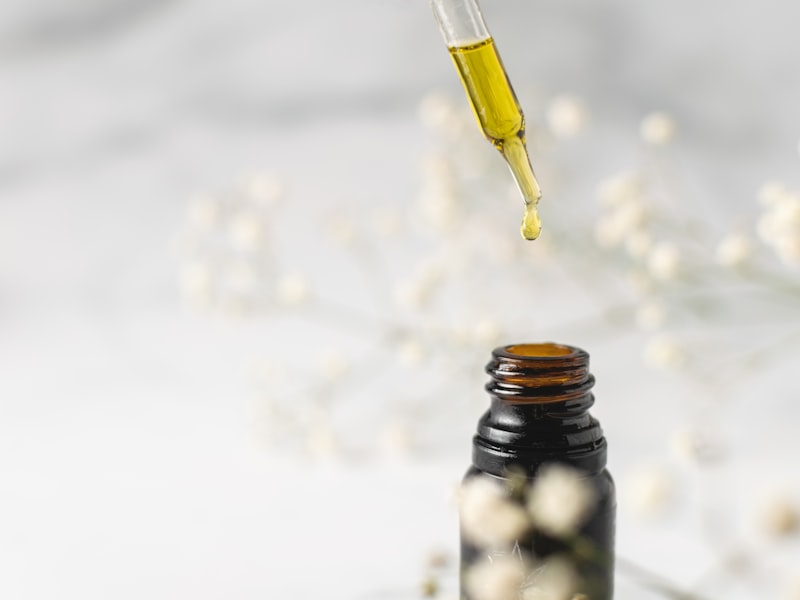
Most cannabis dosing instructions come down to a unit: one gummy, half a dropper, one draw from a vaporizer. The unit is not a dose — it is a packaging convention. It tells you nothing about how many milligrams of THC you are taking, how that quantity compares to what you took last time, or whether it is a reasonable amount for your body weight, your tolerance, or the activity you have planned. Buying and consuming cannabis by the unit is one of the reasons people have such variable and sometimes confusing experiences with it.
The biphasic response problem
THC is biphasic, meaning its effects do not scale linearly with dose. At low doses — roughly 1 to 5 milligrams for most people who are not heavily habituated — THC tends to produce relaxation, mild mood improvement, and reduced anxiety. At higher doses, often above 10 milligrams for people without significant tolerance, it can produce the opposite: anxiety, racing thoughts, paranoia, and a disorientation that is distressing rather than pleasant. The same compound, at a higher dose, reverses its most desirable effects for many users.
The therapeutic window — the dose range where THC does what most people want without unwanted side effects — is narrow and varies considerably by individual. What makes this particularly difficult is that the step from "this works well" to "this is too much" can be as small as 2 to 3 milligrams. If you are buying products measured in 10-milligram units, you are navigating a 10-milligram staircase in territory where the optimal dose for a broad population sits somewhere on a 1-milligram ramp.
Why 3.33 milligrams
3.33 milligrams is one-third of a 10-milligram serving — the standard unit in cannabis products designed around regulatory constraints and commercial habit rather than pharmacology. At 3.33mg, most people who are not heavily habituated to THC will feel some effect: mild relaxation, the beginning of sleep onset, a reduction in anxious thoughts. Most people report staying clear-headed at this dose. It sits in the lower half of the therapeutic window for a broad population.
The practical case for this dose is also about increment. Start at 3.33mg and find it insufficient, and your next step is 6.67mg — still below 10mg, still likely sub-intoxicating for most people. From there, 10mg if needed. Starting at 10mg gives you one data point and a long, uncertain path to calibration. Starting at 3.33mg gives you three distinct increments before reaching a dose that could be unpleasant for a sensitive or less-experienced user. The math is not elegant, but the logic is: start with the smallest amount that might work, wait long enough to know whether it worked, then adjust by the smallest meaningful increment.
The caffeine comparison
We do not dose caffeine by the cup. We understand intuitively that a 12-ounce drip coffee and a double espresso contain different amounts of caffeine, that 200mg and 400mg produce different experiences, and that the right amount depends on what you have had already that day, how sensitive you are, and how soon you need to sleep. People who track caffeine intake talk about milligrams. They adjust based on whether they are at altitude, whether they ate, whether they slept well the night before.
Cannabis has not been talked about this way, for understandable historical reasons. Prohibition made precise dosing impossible — you cannot print a milligram count on an unregulated product, and even if you could, the actual cannabinoid content of unregulated cannabis was too variable to measure. Legal markets have changed the first constraint, but consumer habits formed around the second are slow to shift. Most people still experience cannabis dosing as a rough estimate rather than a measurement, even when the label tells them exactly how many milligrams are in the bottle.
The tincture format is where this changes. A calibrated dropper delivers a known volume. A known volume delivers a known number of milligrams. The math is straightforward in a way that hitting a vaporizer or eating a gummy simply is not — gummies cannot be easily divided, and inhalation cannot be meaningfully metered across devices and techniques.
How to actually calibrate your dose
Start at the lowest dose that seems plausible — for most people using a tincture for sleep, that is 2 to 5mg THC. Hold that dose for three to five nights before adjusting. Sleep effects from cannabinoids are variable night to night based on how tired you are, stress levels, and timing of administration, so single-night data is unreliable. After a week at a consistent dose, you have something to work with.
If the dose is clearly doing nothing, increase by 1 to 2mg and repeat. If it produces unwanted effects — next-morning grogginess, anxiety in the hour before sleep, unusually vivid or disturbing dreams — step back down. Next-morning grogginess usually means the dose is too high or was taken too late; THC has a half-life that can leave residue if the dose is large enough. The goal is the lowest effective dose, not the maximum comfortable one. At the lowest effective dose, tolerance builds more slowly, next-morning effects are minimized, and the formula continues to work across weeks rather than requiring progressive increases.
The tincture vs. gummy piece covers why consistent onset time is a prerequisite for any useful dose data — if the time between taking something and feeling it varies by an hour, you cannot run a real experiment. For a tincture with milligrams stated clearly and a sublingual format that keeps onset predictable, Moonrise is the place to start.
The StarFlora Journal is published by StarFlora, which makes and sells the cannabis tinctures linked in these articles. Articles are general information about cannabinoids and formulation — they are not medical advice, and they are not a substitute for talking to a healthcare provider. Individual responses to cannabinoids vary.