
Fifteen to thirty minutes versus ninety. That single difference — the gap between when you take something and when you start to feel it — changes almost everything about how you should use it. Half an hour is plannable. You can build it into a routine, time it to your lights-out, and adjust the dose based on last night's experience. Ninety minutes is a variable that swallows the ability to calibrate. Take it too early and it hits at full force while you are still watching something on your phone. Take it too late and you have been lying in the dark for an hour wondering whether it is working. Take another because you thought it was not, and you are two doses deep into an unpredictable night.
How sublingual absorption works
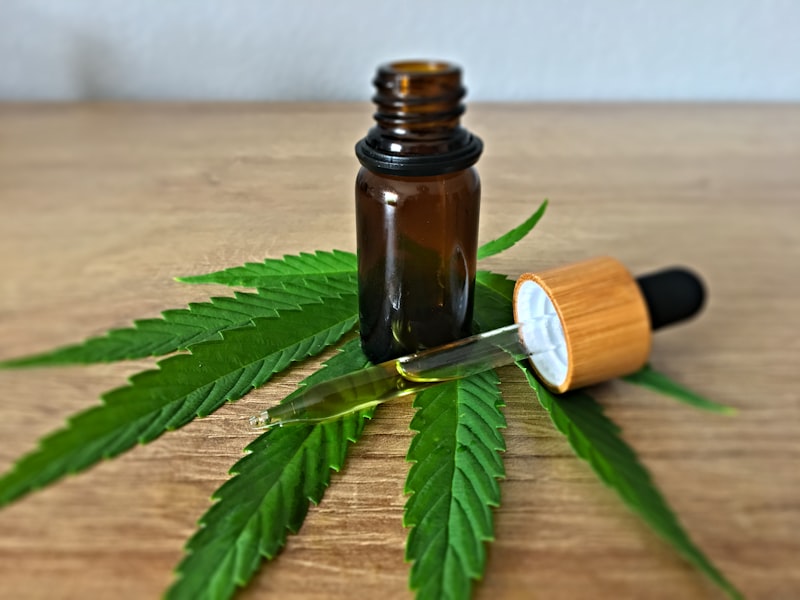
A tincture taken sublingually — held under the tongue for 60 to 90 seconds before swallowing — is partly absorbed through the oral mucosa, the thin and richly vascularized tissue lining the floor of the mouth. Lipophilic compounds like cannabinoids can pass through this tissue directly into the bloodstream, bypassing the gastrointestinal tract entirely. This route of absorption is faster than swallowing because it skips digestion and avoids what pharmacologists call first-pass metabolism — the process by which the liver chemically modifies substances before they reach systemic circulation.
Not all of a sublingual dose is absorbed through the oral mucosa. Some is swallowed and absorbed through the gut in the conventional way. The proportion depends on how long you hold the tincture, the carrier oil used, and individual anatomy. But the fraction that does absorb sublingually typically begins producing effects within 15 to 30 minutes — a window narrow enough to plan around in a way that edibles simply cannot match.
What happens with edibles
A cannabis edible — a gummy, a chocolate, an infused beverage — must be fully digested before it takes effect. Cannabinoids travel through the stomach, are absorbed across the intestinal lining, enter the portal circulation, and pass through the liver before reaching systemic circulation and the brain. This process takes time: typically 45 to 120 minutes, highly variable depending on stomach contents, digestive rate, individual metabolism, and the fat content of the edible itself. A gummy eaten after a large meal can take considerably longer to absorb than the same gummy on an empty stomach.
The liver does not simply pass THC through unchanged. It metabolizes delta-9 THC into 11-hydroxy-THC, a different compound that is more psychoactive than delta-9 THC, crosses into the brain more efficiently, and has a longer duration of action. This is one reason edibles often feel stronger and last longer than expected for people more accustomed to sublingual or inhaled cannabis: the compound that actually reaches the brain is pharmacologically more potent, even when the milligram count on the label is identical. A 10mg gummy does not deliver the same experience as a 10mg sublingual dose.
Why onset predictability matters for sleep
For sleep specifically, the predictability of onset is almost as important as the effect itself. A sleep aid that might take effect anywhere from 30 minutes to two hours after you take it is difficult to incorporate into a reliable routine. Sleep is sensitive to timing: taking something at 10 p.m. and not feeling it until midnight does not produce a good night. Taking something at 10 p.m. and feeling it clearly arrive by 10:30 gives you something to work with.
The narrow onset window of a tincture is also what makes precision dosing possible in a practical sense. If the same dose reliably produces an effect at roughly the same time each night, you can observe the dose-response relationship and adjust meaningfully. If the timing varies by an hour depending on whether you ate dinner or how stressed you were, you cannot learn much from the experiment. Dose calibration — the process of finding the lowest effective amount and staying there — requires a format that gives you consistent feedback. A tincture does that. A gummy, in most cases, does not.
When a gummy is the better choice
The argument for tinctures is strongest for sleep and for use cases where precise timing matters. There are situations where a gummy is the more appropriate tool.
When you want a longer duration of effect, the first-pass metabolism that makes edibles slower to start also makes them longer to finish. The 11-hydroxy-THC produced by hepatic processing has a longer half-life than delta-9 THC, which means edible effects can last 4 to 8 hours compared to 2 to 4 hours for typical sublingual absorption. For overnight comfort, for steady all-day low-dose use, or for situations where re-dosing is inconvenient, the longer duration is a feature rather than a drawback.
Gummies are also more portable and require no technique. There is no dropper, no holding liquid under the tongue, no measurement. For people who find the taste of cannabis extract unpleasant even in a flavored tincture, a well-made gummy with natural flavoring is simply a more pleasant way to consume. And for social or travel situations where discretion matters, a gummy is considerably less conspicuous than a tincture bottle.
Choosing based on what you are actually trying to do
The format question is not a values question. It is a practical one, and the answer changes depending on the goal. For sleep — for the combination of reliable timing, dose precision, and a 2-to-4-hour effect window that is less likely to linger into the morning — a sublingual tincture is the better-engineered tool. For sustained overnight effects, convenience, or an application where you do not need to know exactly when it will arrive, a gummy earns its place.
Understanding the difference also changes how you evaluate the milligram counts on each format. Ten milligrams of THC in a tincture and 10 milligrams of THC in a gummy are not the same experience. If you are trying to find your dose, starting with a tincture at a lower milligram count and adjusting from there gives you more information per experiment. The precision dosing piece covers how to run that calibration. And for the carrier side of the tincture equation — why glycerin versus MCT changes the experience further — the carrier piece has the details.
The StarFlora Journal is published by StarFlora, which makes and sells the cannabis tinctures linked in these articles. Articles are general information about cannabinoids and formulation — they are not medical advice, and they are not a substitute for talking to a healthcare provider. Individual responses to cannabinoids vary.